

Guide
Car Parts on Back Order: What It Means and What to Do
What 'back order' means for car parts, how a national back order differs from NLA, what a VOR order is, how long a back order takes and what to do meanwhile.
By REMCAM Automotive LtdLast updated 9 min read
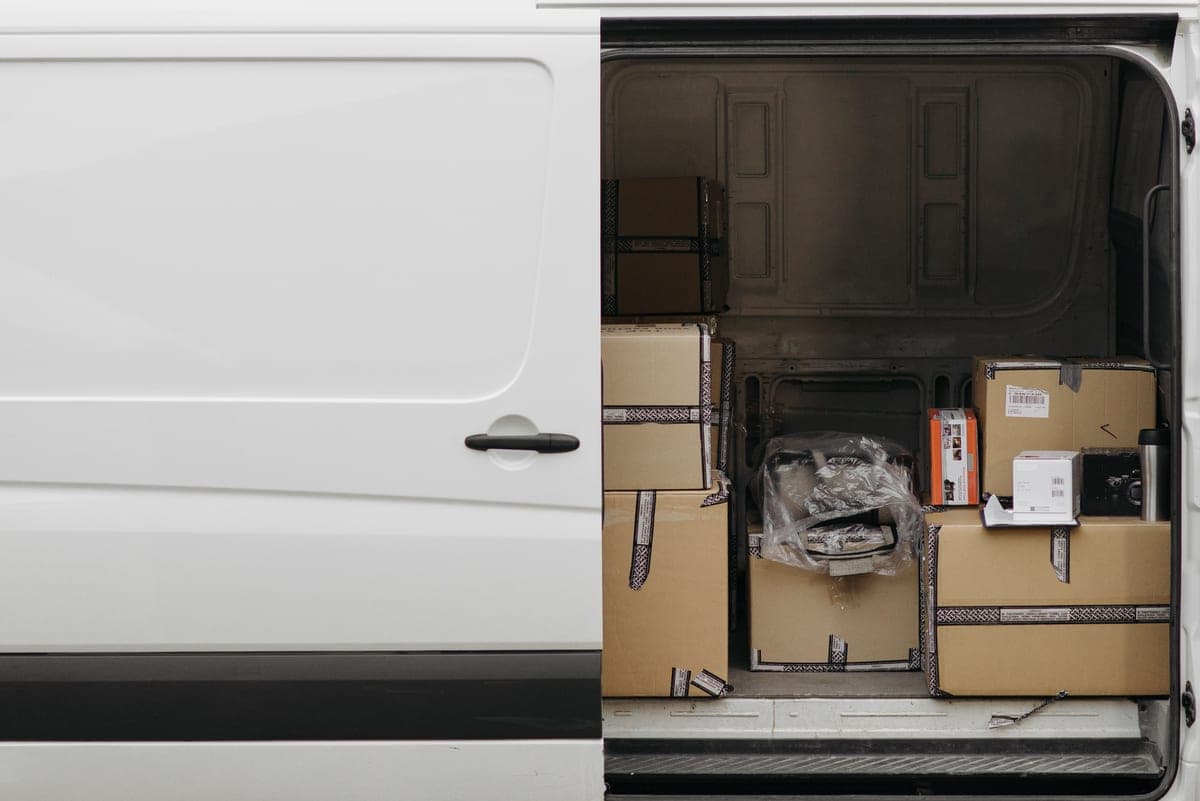
In short:A part on back order is still in production — the supplier simply has no stock to send, so your order is queued. That is a statement about one distribution network's shelves, not about the part's existence, which is why a part on national back order in the UK can be a stock item in another market. The practical work is confirming the number, finding out which order type the part is on, and deciding how long the repair can wait.
What does 'back order' mean for car parts?
A car part on back order is still in production, but the supplier has no stock to send. Your order is recorded and held in a queue until stock arrives. The part is not discontinued and not unobtainable — it exists, and the only open question is when it will reach you.
That distinction matters because a back order describes a warehouse, not a part. When a dealer's screen reports a back order it is reporting the position of one distribution network — usually the manufacturer's UK parts operation. The same part number can be a shelf item in another market's network at the very moment a UK screen reports a back order, which is the single most useful thing to know when a job is being held up.
The rest of this guide covers the vocabulary you will see on a parts confirmation, how the order was actually raised and why that changes the answer, what drives the delay, and the sequence to work through while the part is outstanding. If the part turns out not to be in production at all, the companion guide on finding discontinued car parts picks up from there.
Back order, out of stock, NLA and discontinued are four different answers
Parts desks use these terms loosely, and the words arrive second-hand through an estimator or a service advisor before they reach you. Each one points at a different problem and a different first move.
- On back order — still in production; the supplier has no stock and your order is queued, with or without an estimated date. First move: confirm the number, then find out whether stock exists elsewhere.
- Out of stock — still in production; this branch or dealer has none, but the national warehouse or another branch may still hold it. First move: ask the parts desk to check the wider network before the order is raised.
- National back order — still in production; the UK network is empty and every UK dealer is in the same queue. It says nothing about stock abroad. First move: treat it as a UK supply problem and look at other markets.
- NLA (no longer available) — the manufacturer's parts system in that market no longer supplies the number, which is a statement about one catalogue rather than about production. First move: check for a supersession, then other markets.
- Discontinued or obsolete — production has stopped, so what remains will not be replenished. First move: move to the discontinued parts search.
- Superseded — still supplied, under a newer number. You simply have the wrong number. First move: order the current one.
Of those six, only two are genuinely bad news. A back order and an out-of-stock are timing problems; a supersession is not a problem at all. It is worth establishing which of the six you have before anybody tells a customer the car will be weeks.
What 'national back order' means
Most manufacturers hold UK stock centrally rather than at each dealer: a national parts operation supplies every franchised dealer from one pool, topped up from the manufacturer's European or global distribution centres. While that pool has stock, a dealer who has sold out gets the part overnight. When the pool itself is empty, every UK dealer is drawing on the same empty shelf — and that is a national back order.
Two consequences follow. The first is that ringing round other dealers stops working: dealer-to-dealer transfers only help while somebody still has shelf stock, and once the national pool is out, the dealers are out too. The second is that the queue is filled when the next shipment lands, in whatever order the distributor applies — which is why two workshops that ordered the same part a day apart can get it weeks apart.
What a national back order does not tell you is anything about the rest of the world. Part numbers are issued globally and stock is held nationally, so a number with no UK availability is routinely a catalogue item in mainland Europe, the Gulf, Japan, Australia or North America. That is the gap our back-ordered parts service exists to work in.
How the order was raised — and why VOR matters
A dealer parts department does not have one kind of order. Dealer management systems typically separate routine replenishment (a stock order, batched up and sent on a schedule with the cheapest carriage) from an order raised immediately with the supplier for a job in the workshop. Alongside both sits a third type: VOR.
VOR stands for Vehicle Off Road. It is the priority status used when a vehicle cannot be repaired, completed or returned to the customer without the part. In DMS Navigator's own documentation, a VOR requirement is recorded and then combined with others into a daily VOR order to the supplier, rather than each request going out on its own — so it is a distinct queue with its own handling, not simply a note on a normal order.
The practical point is this: a part requested as a routine stock line is treated as a routine stock line. If the vehicle is immobile, stripped or sitting in a bay, say so and ask for the order to be raised as VOR. VOR is an operating designation rather than a regulated one — the approval rules, the carriage premium and what the escalation actually changes vary by manufacturer and importer — so ask what it costs and what it is expected to achieve before agreeing to it.
Ask the parts desk which order type your part is on. "It's on order" and "it's on a VOR order" are different queues, and nobody will move it to the second one unless you ask.
Why parts go on back order
Back orders are rarely random. A handful of mechanisms produce most of them, and recognising which one you are in tells you whether waiting is sensible.
- Single-source components. Many parts are made by one supplier on one line for every market. There is no second source to switch to, so a problem at that supplier empties every network at once.
- Batch production for low-volume variants. Parts for a facelift-only trim, a small-market engine or a short production run are made in batches rather than continuously. Between batches there is nothing to ship.
- Concentrated electronics supply. Modules, sensors and control units depend on semiconductor supply chains the UK government's own National Semiconductor Strategy describes as highly interdependent, complex and geographically concentrated, with manufacturing heavily concentrated in Taiwan. A disruption a long way upstream surfaces as a back-ordered module.
- A demand spike on one number. A safety recall or a widely recognised failure mode concentrates national demand onto a single part in a matter of weeks, against stock planned for ordinary wear rates.
- Model-year and facelift change-over. Supply of the outgoing part winds down before demand does, and the incoming number is not yet stocked in depth.
- Allocation. When supply is short, distributors ration rather than queue — commonly favouring warranty work and VOR cases. An order sitting outside those categories can be overtaken repeatedly.
- Accident-repair parts are ordered in ones. Panels, bumpers, lamps and the brackets and sensor carriers behind them are bought for a specific job, so nobody in the chain holds depth in them.
How long does a back order take?
There is no honest general answer, and any figure quoted on a website would be invented. The wait depends on the part, the marque, where it is made and whether the manufacturer is allocating — and an estimated date from a distributor is a forecast of when stock is expected to land, not a commitment to supply. It can move later, and occasionally earlier.
What you can read, rather than guess at, is how much confidence the date deserves:
- Is there a date at all? A back order with no estimated date means the distributor has no scheduled supply to forecast from. That is the situation in which looking outside the UK is most likely to be worth it.
- Has the date already moved? The parts system holds the history. A date that has been pushed twice is telling you something the current date is not.
- Is the part made continuously or in batches? A batch item can be unavailable for months and then arrive in quantity, which makes a mid-batch estimate close to meaningless.
- Is the part being allocated? If it is, your position in the queue is not fixed, and VOR status may matter more than the date.
Before you give a customer a key-to-key date, ask the parts desk for the order's ETA history rather than its current ETA. The pattern of changes is the better predictor.
What to do while a part is on back order
This is the order worth working in. The early steps are quick and occasionally end the problem outright, so they are worth doing before the later ones.
- Confirm the part number against the VIN. A back order on the wrong number is a wait for a part you do not need. See finding car parts by VIN or registration.
- Check for a supersession. If the number has been replaced, the current number may be in stock and the back order irrelevant.
- Establish the order type and the ETA history. Ask whether it is a stock line, an emergency order or a VOR order, and whether the date has moved.
- Ask for VOR status if the vehicle is off the road. Then ask what it changes and what it costs.
- Check availability in other markets. The same genuine number, sourced from a network that still holds stock — see international parts sourcing.
- Consider an OEM or OES equivalent where the job allows it. Often the same component in different packaging, but not always, so the category has to be stated rather than assumed — see genuine, OEM, OES and aftermarket parts.
- Consider a sound used genuine part. For castings, brackets, brightwork and body sections this is frequently a better answer than a long wait.
- Consider repair instead of replacement where the manufacturer's repair methods support it for that component.
- Keep the original order open until a replacement part is confirmed and paid for. Cancelling early and then losing the alternative puts you back at the end of the queue.
Back orders on an insurance repair
On an insurer-authorised repair the delay itself becomes something you have to account for, so it is worth documenting as it happens rather than reconstructing it later. Record the date each part was ordered, the order type it went on, every estimated date you were given and every time one changed. That record is what supports a conversation about key-to-key time, an extension on a courtesy vehicle, or a request to authorise a different part.
Get authorisation in writing before ordering an alternative, not after. If a genuine part sourced from another market, an OEM equivalent or a used genuine part is the realistic route, the insurer needs to agree to it as part of the repair — and a part already on the shelf is much harder to discuss than one still being quoted. The background on which part categories an insurer or a warranty is likely to accept is in our guide to genuine, OEM, OES and aftermarket parts.
Where the vehicle is immobile and the bay is occupied, genuine body panels sourcing and courtesy and hire vehicles are the two services workshops most often use to keep an accident repair moving while a problem line is outstanding.
Questions worth asking the parts desk
A back order confirmation usually answers none of these, and all of them change what you do next.
- Is this a national back order, or is it just this branch or dealer?
- Has this part number been superseded?
- Is there an estimated date, and has it already moved?
- What order type is it on, and can it be raised as VOR?
- Is the part currently being allocated rather than queued?
- Does the part show availability in any other market's catalogue?
How REMCAM handles a back-ordered part
REMCAM Automotive Ltd is an independent, trade-only parts-sourcing specialist. When a garage, bodyshop or restorer sends us a back-ordered line, we confirm the part number and its specification against the VIN, including any supersession, then check availability with specialist suppliers and automotive contacts in the UK and internationally. You get availability, price and a lead time for the specific source before anything is ordered, and where a genuine part cannot be found we describe what can be — by its actual category, not a flattering one.
Send the registration or VIN and the back-ordered part number through Request a Part, or see back-ordered parts sourcing for how the service works. We supply the trade only; private owners should ask their garage or bodyshop to send the request.
Sources
Frequently asked questions
What does back order mean for car parts?
A part on back order is still in production, but the supplier has no stock to send. Your order is recorded and queued until stock arrives. The part is not discontinued and not unobtainable — the only open question is when it will reach you.
What does national back order mean?
The manufacturer's UK parts operation holds stock centrally for every franchised dealer. A national back order means that central pool is empty, so every UK dealer is in the same queue and dealer-to-dealer transfers no longer help. It says nothing about stock in other markets.
How long does a car part back order take?
There is no general answer, and any figure would be invented. It depends on the part, the marque, where it is made and whether the manufacturer is allocating. An estimated date from a distributor is a forecast rather than a commitment, so ask whether the date has already moved.
Is a back-ordered part the same as a discontinued part?
No. A back-ordered part is still in production and will be supplied again. A discontinued part is no longer made, so remaining stock will not be replenished. They need different searches, which is why it is worth establishing which one you have.
What is a VOR order?
VOR stands for Vehicle Off Road — a priority status used when a vehicle cannot be repaired, completed or returned to the customer without the part. It is a separate queue in a dealer's parts system. It is an operating designation, not a regulated one, so the rules and any carriage premium vary by manufacturer.
Should I cancel a back order?
Not until a replacement part is confirmed. Many workshops keep the original order open as a fallback and use whichever part arrives first. If you cancel and then lose the alternative, you rejoin the queue at the back.
Does a back order mean nobody in the world has the part?
No. Part numbers are issued globally but stock is held nationally, so a part with no UK availability is often a catalogue item in mainland Europe, the Gulf, Japan, Australia or North America. Some back orders are genuinely global production problems, and those are worth identifying early.
Can a private owner ask REMCAM about a back-ordered part?
Not directly — REMCAM is trade only. Ask your garage, bodyshop or restoration specialist to send the request on your behalf using the Request a Part form.
Can't find the part? Let us find it.
Send us the registration, VIN or part number and we'll search our sourcing network.