

Parts sourcing
Genuine Jaguar Parts for the UK Trade
Genuine Jaguar parts sourced for UK workshops — XE, XF, F-PACE, E-PACE and I-PACE, the XJ, XK and F-TYPE behind them, and the XJS, E-type and earlier saloons behind those. Jaguar is now an unusual marque to source for, and not because the cars are rare. It is the one large British parc with no new cars arriving behind it.
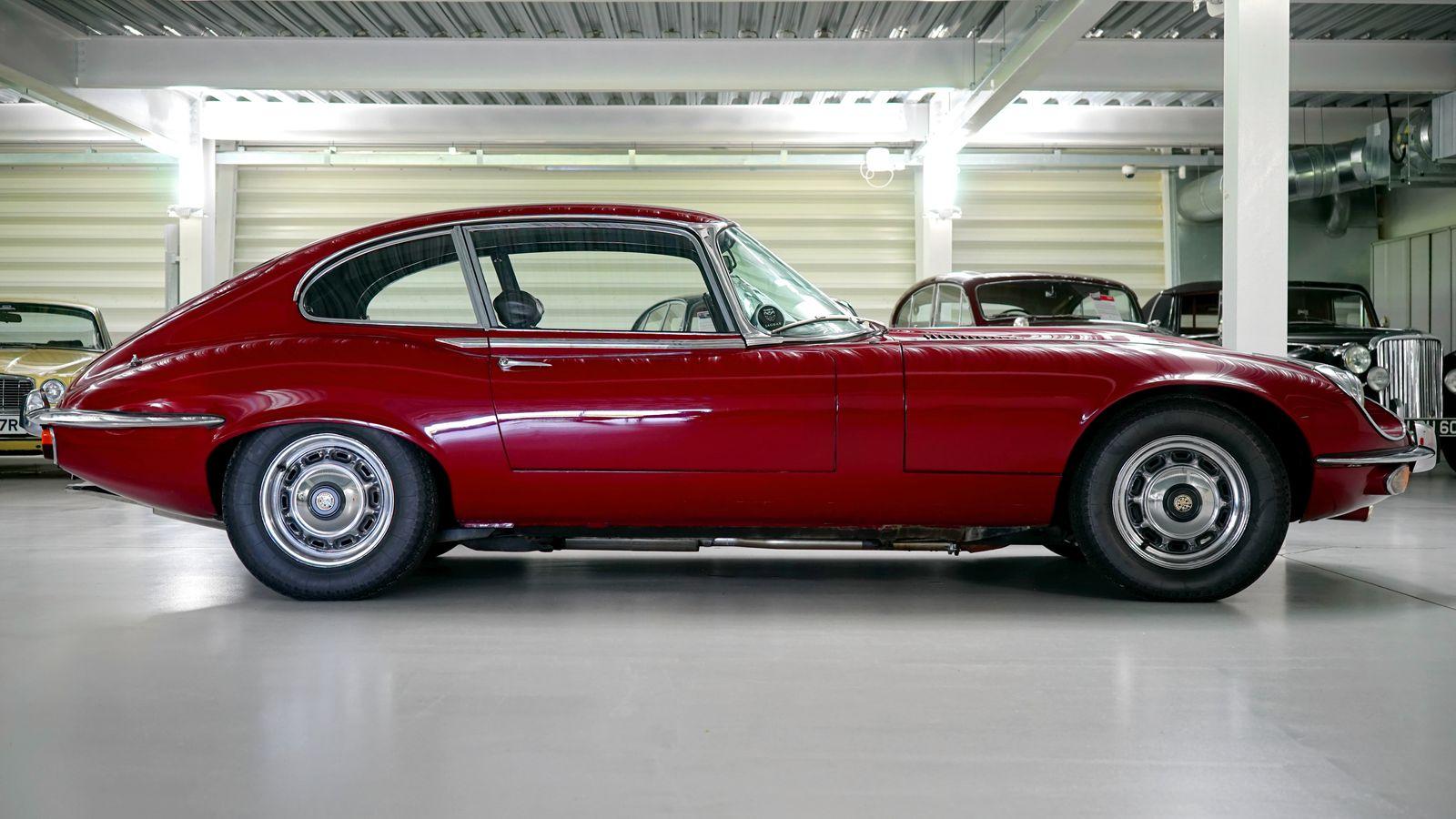
A large parc with nothing new arriving behind it
Every other marque a UK bodyshop sources for is being topped up. New cars register, the parts network stocks against them, and the oldest cars quietly fall off the back of the provision while fresh ones join at the front. Jaguar is the exception, and the national figures show it plainly. In the SMMT's UK new car registrations brand table for October 2026, Jaguar has its own row and that row reads 8 registrations year to date, against 1,725 over the same period of 2025 — a fall of 99.5 per cent, in a UK market the same table puts at 1,892,000 cars. For comparison, the table gives Land Rover 53,769 and Porsche 15,498.
That is not a collapse in the cars on the road. It is a deliberate pause. Jaguar stopped selling its existing range in Britain ahead of relaunching as an electric marque: reporting its November 2024 statement, Auto Express recorded that “From November 2024, new Jaguar sales will come to an end”, quoting the company saying it had “ceased allocation of our current generation of Jaguar vehicles” “as it prepares to relaunch as a pure electric luxury car brand”.
The practical consequence for a workshop: every Jaguar that comes through the door is now an out-of-production car. The parc is large, it is ageing uniformly, and the usual assumption — that a reasonably recent car will be easy and an old one will be hard — holds much less well on this badge than on any other.
So the first question on a Jaguar part is rarely whether it exists. It is which of three systems currently holds it: the live parts network for the recent cars, the manufacturer's classic parts operation for the older ones, or the specialist and new-old-stock trade for everything either side. Those are three separate searches, and a nil result from one says nothing about the other two.
What the manufacturer's classic parts operation covers
Jaguar's heritage provision is run through Jaguar Land Rover Classic, which describes itself on its own site as “established to provide genuine parts for owners, caring for vehicles that have been out of production for 10 years or more”, and says it delivers “tens of thousands of Genuine Parts to thousands of customers across the world”. Its parts catalogue states the same scope — “We supply parts for Jaguar classic models that have been out of production for over ten years” — and describes what you are buying as “a genuine Jaguar part engineered to original specifications using our drawings and tooling”.
That last phrase is worth reading carefully, because it is doing more work than it looks. A part made now, from the original drawings and tooling, is a genuine part rather than a reproduction — but it is also not the part that was made in period. On a concours restoration that distinction can matter to the owner, and it is a far cheaper conversation before an order than after one.
The published model index is specific rather than general, which is unusually helpful. These are the Jaguar model lines the classic parts catalogue lists, with the spans as published:
| Model line as listed | Span as published | What a workshop should take from it |
|---|---|---|
| E-type | 1961–1975 | The whole production run is inside the provision. |
| XJS Sports Coupé / Convertible | 1975–1996 | A twenty-one-year run covered end to end. |
| Series III Saloon | 1979–1992 | Listed separately from the later XJ generations. |
| XJ6 & XJ12 (XJ40) | 1987–1994 | The XJ40 generation in its own entry. |
| XJ (X300) | 1995–1997, VIN 720125 to 812255 | Split by VIN range, not just by year — see the identification section below. |
| XJ (X308) | 1998–2003, VIN 812317 to F59525 | A separate VIN band again. |
| XJ (X350) | 2003–2009, VIN G00442 to H32732 | Three XJ entries across fifteen years, each with its own band. |
| XK8 Coupé / Convertible (X100) | 1997–2006 | The first XK8 generation. |
| XK (X150) | 2006–2014, from VIN B00379 | The later XK, again bounded by VIN. |
| S-type (X200) | 1999–2008 | The retro saloon, in full. |
| X-type (X400) | 2001–2010 | In full. |
| XF (X250) | 2009–2015 | The first XF generation only. |
| F-TYPE (X152) | 2014–2024 | Listed despite ending production recently — in practice the provision reaches further forward than the ten-year line suggests. |
| Daimler Limousine | 1968–1992 | Worth knowing the Daimler cars are inside the same system. |
Read as a whole, that index describes a strong middle and two thinner ends. It is a genuinely substantial provision across roughly fifty years of Jaguars, and for a workshop it is usually the right first call on anything from an E-type to an X250 XF.
The two ends the published list does not reach
Both ends are where a sourcing service earns its place, and both are easy to misread as “no longer available” when they are nothing of the kind.
- The cars before the E-type. The published index starts in 1961. The Mark VII, VIII and IX saloons, the XK120, XK140 and XK150, the Mark 2 and the 420 and 420G are not named on it. Parts for these cars very much exist — through the marque specialist trade, the new-old-stock market, remanufacture and good used genuine components — but they are not reached by the same route, and a search that only tries the manufacturer's catalogue will come back empty on cars that are in fact well supported elsewhere.
- The cars after the listed generations. The index lists the XF only to 2015 and does not name the XE, the later XF, the F-PACE, E-PACE or I-PACE. Those are the newest cars and they are still served by the live parts network rather than by the classic operation — but they are also out of production with no successors registering behind them, which is a different supply position from an equivalent BMW or Audi of the same age. Back orders on this band are worth testing properly rather than waiting out.
Neither of these is a dead end. They are simply different searches, and the mistake we are most often asked to unpick is a part being written off because the one obvious route returned nothing. Our guides on what to do when a car part is discontinued and how to source hard-to-find car parts set out the method in full.
What actually resolves a Jaguar part number
Jaguar is a marque where identification mistakes are unusually expensive, and the manufacturer's own catalogue shows you why: three XJ entries across fifteen years, each bounded not by model year but by a VIN range — 720125 to 812255, 812317 to F59525, G00442 to H32732. The manufacturer is telling you, in its own index, that the model name and the year do not settle which car you have. Send the number off the car.
- VIN or chassis number, every time. On the XJ generations in particular the correct parts list is selected by VIN band rather than by year, and two cars a few months apart can fall either side of a boundary.
- Which generation and which facelift. Several of these model lines ran through distinct generations sharing a name — XJ, XF, XK — and a facelift within a generation changes lamps, bumpers, grilles and interior parts without changing what the car is called.
- Build date rather than registration date. Running changes land by production date. A car registered after a change may have been built before it, and a re-registered car can read years adrift.
- Option and specification content. Lighting, wheel and brake options, seat types, audio and driver-assistance fits and veneer or trim combinations all change the number behind a part.
- Which market the car was built for. Jaguar was a heavy export marque and a high proportion of the older cars now in UK workshops came back from elsewhere. Lighting, glazing, emissions-related components and sometimes trim differ while the model name does not.
- Paint, trim and veneer codes read off the car. Not a colour name, and not the colour the car appears to be — respray and retrim history on these cars is common.
- Handedness. Manufacturers define left and right from the driver's seat and estimating systems do not always agree. A photograph of the part in position settles it in one exchange.
- Supersessions. A number from an old microfiche, an old parts book or an old invoice may be several revisions behind. We follow the chain forward and tell you what replaced what.
If the details supplied do not resolve it we ask for a specific photograph rather than guessing. Our guide to finding car parts by VIN or registration sets out what each identifier does and does not reveal.
Bodywork, lighting, glazing and trim
Panels and bumper assemblies, lamps, glazing, mirrors, brightwork and the interior trim around them make up most of the body requests we see on this marque. On the recent cars the usual issue is a back order on a line with no new production behind it; on the older saloons and sports cars it is the small items — brightwork, badges, switchgear, seals and interior fittings — that hold a project, which is where the classic parts operation, genuine new old stock and good used genuine parts each earn their place. See genuine body panels for how we work a body list from an estimate.
There is a step before any of that on the newer cars. Where a structure is aluminium-intensive or bonded rather than conventional steel, whether a given area may be repaired at all is the manufacturer's determination and not an estimator's judgement, and the documented method decides which components are replace-only and in what order. We do not publish repair procedures and we do not infer them — we source the documented method for the vehicle and repair area you describe, alongside the parts. Ask for both in one enquiry and the estimate carries those items from the start. See manufacturer repair methods, and bodyshop support for how that runs with courtesy vehicles and recovery on a car that will hold a bay for a while.
Mechanical, driveline and electronic components
Engine ancillaries and cooling, transmission and driveline parts, suspension — including the air suspension components these cars are known for — braking components, and the control modules and sensors the later cars carry in quantity. All of it ordinary sourcing work, done against the VIN rather than the model name. Electronic units are where identification matters most, because a module has to match the car's build to be coded to it; the wrong one is a wasted bay rather than a returnable inconvenience. See mechanical components.
Imports, market specification and landed cost
Jaguar sold heavily outside Britain for decades, which cuts both ways. It means a part that has run out here may still be stocked in a market that took more of the model than we did — genuinely useful on the saloons and on the XK and XF generations. It also means a car in front of you may not be the specification the model name implies. Lighting is the usual decider on whether an imported part is usable at all: DVSA's MOT inspection manual notes that “It's acceptable for masks or converter kits to be fitted to right hand dip headlamps” “to temporarily alter the lamp for use in the UK by removing the beam ‘kick-up’ to the right” — see section 4: lamps, reflectors and electrical equipment. For a car going back to a customer the correct left-dipping lamp is almost always the right answer, and that is what we source unless you tell us otherwise.
Where a part comes from outside the UK it is an import, so duty and import VAT belong in the figure we give you rather than in a later invoice. Rates depend on the commodity code and the origin of the specific item, and HMRC's Trade Tariff is the authority; we quote the landed cost for the actual source rather than an overseas shelf price. Our international parts sourcing page sets out the wider position, and European and German car parts covers how continental searches run.
Older cars, the forty-year line and what you are restoring to
On the earlier cars it is worth settling which specification you are sourcing to before an order rather than during one. GOV.UK's guidance on historic vehicles states that the MOT exemption applies where “the vehicle was built or first registered more than 40 years ago” and “no ‘substantial changes’ have been made to the vehicle”, giving as its example of a substantial change “replacing the chassis, body, axles or engine to change the way the vehicle works”. On a long restoration that distinction decides whether you are sourcing the component the car carries now or the one it left the factory with.
We are not advising on any car's registration status — that sits between the keeper and DVLA, whose vehicle information service shows the basic record a registration holds. Tell us which version you want and we search for that one. For project work across a whole car see classic and vintage car parts and restoration parts.
When the part exists and the route does not
Three situations send a Jaguar parts request to us, and on this marque the first two arrive in roughly equal numbers.
- The car is too new for the classic operation and too old for stock depth. The XE, the later XF, the F-PACE, E-PACE and I-PACE sit in a band with no new registrations behind them and no classic provision in front of them yet. Lines go to back order and stay there. See back-ordered parts.
- The car is too old for the published index. Anything before the E-type is not named in the manufacturer's classic catalogue, which is a statement about that catalogue rather than about the part. Marque specialists, the new-old-stock trade and remanufacture cover a great deal of it. See obsolete and discontinued parts and hard-to-find parts.
- The number is live but the route is closed to you. Catalogued and supplied, but through a channel an independent workshop is not inside. See genuine OEM parts sourcing.
Work of this kind sits alongside the rest of our specialist sourcing — see prestige, performance and supercar parts for the wider picture, and Land Rover parts for the other half of the same manufacturer's classic operation.
How a Jaguar parts request works
- Send the registration, VIN or chassis number, a description of the part and, where you have them, a part number, an estimate line, a diagram reference or a photograph. Tell us whether the car is being kept original.
- We confirm the correct part number for that specific build — including the VIN band on the XJ generations, supersessions and specification-dependent variants — and check which market the car was built for.
- We search the live parts network, the manufacturer's classic parts provision where the model falls inside it, the markets that still hold the number, marque specialists and — if you have told us it is acceptable — genuine new old stock and good used genuine parts.
- You get availability, the category of part, where it is coming from, the price and the lead time for that specific source, including the landed figure where the part is an import.
- On approval we order, handle the import where the part comes from outside the UK, and arrange delivery to your workshop.
Independent, and trade only
REMCAM Automotive Ltd is an independent parts-sourcing specialist and is not affiliated with, approved by or an authorised agent of any vehicle manufacturer. We are not an appointed Jaguar dealer or repairer and we are not part of Jaguar Land Rover Classic. Manufacturer and model names are used to identify the cars we source parts for, and references to the manufacturer's own classic parts provision describe a publicly published scheme — they are not a claim to be part of it. Being independent is the point of the service on a marque in this position: because we are not tied to one franchise's parts system, a single request can be searched across the live network, the classic provision, other markets, marque specialists and the new-old-stock trade at the same time rather than one after another.
We supply the trade only — garages, bodyshops, accident repair centres, restoration specialists, marque specialists and fleet workshops. Private owners should ask the business carrying out the work to send the request, which also means the part is identified against the car in front of the technician. Send the details through Request a Part.
Common Jaguar parts requests
Requests on this marque sort themselves into a small number of patterns, and which pattern a job belongs to usually decides which of the three supply systems the search starts in.
- A line on back order for a recent car with nothing behind it. The XE, the later XF, the F-PACE, E-PACE and I-PACE generate most of these. The number is current, the car is out of production, and there is no stream of new registrations pulling fresh stock through the network. The answer is almost never to wait — it is to find the same number in a market that still holds depth.
- Body, lighting and glazing parts for accident repair. Panels, bumper assemblies and carriers, lamps, screens and mirrors. The usual trap is a car that came back from an export market: lighting and glazing can differ while the badge on the boot does not.
- Brightwork, seals, switchgear and interior fittings on the older saloons and sports cars. The category that holds a restoration up for months. Rarely a straightforward catalogue search, frequently genuine new old stock or a good used original, and almost always the longest-lead item on a list.
- A part for a pre-E-type car. Mark VII to Mark IX, the XK120, 140 and 150, the Mark 2, the 420 and 420G. These are not named on the manufacturer's published classic index, which regularly gets read as “no longer available”. In practice the marque specialist trade and the new-old-stock market cover a great deal of it.
- Modules, sensors and electronic units. Build-specific and resolved from the VIN. On the XJ generations in particular a model name and a year will produce the wrong number more often than the right one.
- A part already quoted as unobtainable elsewhere. Worth re-testing here, because a nil answer usually describes one system's view. The live network, the classic provision, other markets and the specialist trade are four separate searches, not one.
What slows a Jaguar parts search down
When one of these orders goes wrong the cause is usually on a short list, and every item on it is cheaper to settle at the request stage than after a part has travelled.
- A model name and a year instead of a VIN. The manufacturer's own catalogue splits the XJ into three entries by VIN range rather than by model year, which is as clear a signal as you will get that the name does not identify the build.
- Assuming the manufacturer's classic catalogue is the whole picture. It is specific about what it covers and silent about everything either side. Silence there is not an availability statement.
- Assuming the car was delivered here. Jaguar exported heavily for decades. Market specification changes lighting, glazing and emissions-related components while leaving the model name alone.
- Treating a back order on a recent car as a waiting game. With no new registrations behind the parc, a dateless back order on this marque is a reason to search other markets now rather than later.
- Not saying whether the car is being kept original. It changes which routes we put in front of you, and it is far better settled with the customer before a used or new-old-stock part is on its way.
- Stripping a car before the repair method is in hand. Where the structure is aluminium-intensive or bonded, the method decides which components are replace-only and in what sequence. Discovered afterwards, that is a re-written estimate and a longer hire.
None of this needs solving before you contact us. Send what you have, and if something is missing we will tell you which detail we need and why it changes the answer.
Jaguar Parts: frequently asked questions
Can you source genuine Jaguar parts for a garage or bodyshop?
Yes — body panels, bumpers, lamps and glazing, brightwork and interior trim, mechanical and driveline parts, suspension and braking components, and electronic modules, across the modern and classic ranges alike. Send the registration, VIN or chassis number. We supply the trade only.
Jaguar has stopped selling new cars in the UK. Does that affect parts?
It changes the shape of the problem rather than removing it. The SMMT's October 2026 brand table shows 8 Jaguar registrations year to date against 1,725 over the same period of 2025, so no new cars are arriving behind the existing parc. In practice that means every Jaguar in a workshop is an out-of-production car, and the whole parc is ageing at once rather than being topped up at the front. Parts are still there — they are just held across three different systems instead of one.
Which Jaguars does the manufacturer's classic parts operation cover?
Jaguar Land Rover Classic describes itself as caring for vehicles "that have been out of production for 10 years or more", and its parts catalogue lists specific model lines: E-type 1961-1975, XJS 1975-1996, Series III Saloon 1979-1992, XJ6 and XJ12 (XJ40) 1987-1994, the XJ X300, X308 and X350 generations, XK8 X100, XK X150, S-type, X-type, XF X250, F-TYPE X152 and the Daimler Limousine. Cars before the E-type are not named on that index, and neither are the XE, the later XF, the F-PACE, E-PACE or I-PACE — which is a statement about that catalogue, not about whether the part can be found.
Can you get parts for a Mark 2, an XK150 or another pre-E-type Jaguar?
Often, yes — but through a different route. Those cars are not listed on the manufacturer's classic parts index, so a search that only tries that catalogue comes back empty on cars that are in fact well supported by marque specialists, the new-old-stock trade, remanufacture and good used genuine parts. We say which category a quoted part falls into before you commit.
Why do you need the VIN rather than the model and year on a Jaguar?
Because the manufacturer's own catalogue is organised that way. It splits the XJ into three entries bounded by VIN range rather than by model year - 720125 to 812255, 812317 to F59525, and G00442 to H32732 - so two cars built months apart can take different parts lists. A model name and a year place a car in a family of builds, not in one.
Are Jaguar classic parts original or remanufactured?
The manufacturer's own wording for its classic catalogue is "a genuine Jaguar part engineered to original specifications using our drawings and tooling". That is a genuine part rather than a reproduction, but it is not the part made in period - which can matter to an owner keeping a car original. We raise the distinction before an order rather than after it, and we tell you which category any part we quote falls into.
Can you supply the repair method for a Jaguar body repair?
We source it rather than publish it. It matters most on the newer cars: where a structure is aluminium-intensive or bonded rather than conventional steel, whether an area may be repaired at all is the manufacturer's determination, and the documented method decides which components are replace-only. Send the repair area with the parts request and we work both together.
Can't find the part? Let us find it.
Send us the registration, VIN or part number and we'll search our sourcing network.