

Parts sourcing
Genuine Mercedes-Benz Parts for the UK Trade
Genuine parts for Mercedes-Benz cars and vans, sourced for UK workshops — current vehicles, the long out-of-warranty parc behind them, and the classics the manufacturer still reproduces parts for. On this marque the answer to an empty UK shelf is often a different category of genuine part rather than a different supplier.
Why a Mercedes-Benz part becomes a sourcing job
Mercedes-Benz is a volume marque in Britain, and that is the root of the problem rather than a reason there isn't one. SMMT's table of new car registrations by marque records 83,453 registrations in the year to October 2026 — 4.4 per cent of the UK market — and that is one year of a parc that has been accumulating for decades, before any of the vans. A workshop sees a lot of these vehicles, and the manufacturer is supporting an enormous spread of variants at once. The UK allocation of any single one of them is finite.
So the difficulty is rarely that a part does not exist. It is that the catalogue holds several versions of it, the UK shelf is empty of the one your vehicle takes, and the dealer screen reports that as unavailable without saying where it is or what else it could legitimately be. Parts sourcing is the work that starts there: confirming which version the vehicle in your bay actually needs, then finding that number wherever it is still held — or establishing that the manufacturer supplies it in another form.
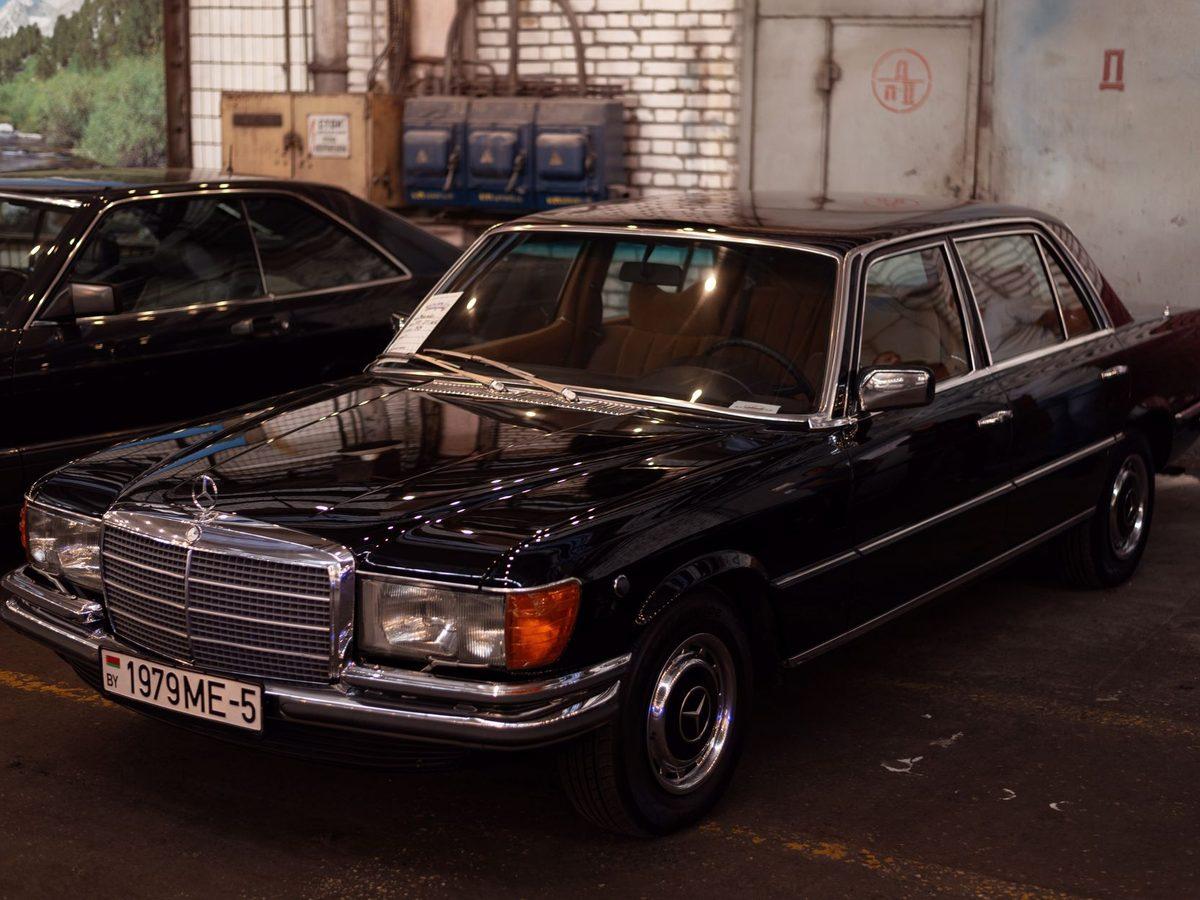
The second difficulty is span. A Mercedes-Benz specialist can have a current car with a high-voltage system in one bay, a fifteen-year-old saloon long out of warranty in the next, a panel van earning its living on the third ramp and something from the 1970s in for recommissioning behind them. Those are four different parts jobs, and the request needs to say which one it is.
Series numbers settle it; model names rarely do
A Mercedes-Benz nameplate can span several complete redesigns, and a good share of those generations is still on the road. The trade handles that with series numbers rather than model names, and so does the manufacturer: its own classic parts search is organised around model series numbers such as 111, 124 and 198 rather than around the badge on the boot lid. A request that gives us the series — or enough detail for us to work it out — starts a search. A request for “a wing for a C-Class” starts a conversation instead.
- Series, not model name. The same nameplate spans platforms, body shells and electrical architectures that share almost nothing in parts terms.
- Build date, not registration date. Running changes and mid-cycle facelifts land by production month. A vehicle registered after a facelift can have been built before it, and takes the earlier parts.
- Engine, transmission and driveline code. Four-cylinder, six-cylinder and diesel cars, rear-wheel-drive and all-wheel-drive versions and the different gearbox fitments diverge on cooling, exhaust, mounting and ancillary hardware.
- Equipment and package content. Suspension type, the headlamp fitted, driver-assistance packages, towing preparation and parking or camera equipment all change the number for the bumper, the carrier, the loom or the bracket behind it.
- Car or van. Mercedes-Benz vans share a badge with the cars and very little else in parts terms. Say which you have; it changes the catalogue, not just the number.
- Supersessions. A number taken from an old diagram, an old box or an old invoice may be several revisions behind the one currently supplied. We follow the chain forward and tell you what replaced what.
- Handedness. Manufacturers define left and right from the driver's seat, and diagrams and estimating systems are not always consistent with each other. A photograph of the part in position settles it.
- What is on the vehicle now. Retrofits, replacement units and previous repairs are common across this parc. The correct part is the one that fits what is actually fitted, which a photograph answers and a model year does not.
The method for pinning down an optioned German vehicle — the VIN first, then the build or option record, and only then the catalogue — is set out in full on European and German car parts. What is particular to Mercedes-Benz is how long each series stays in service and how many equipment permutations the manufacturer has to keep separate across that life.
Genuine remanufactured parts: the route most often missed
This is the thing worth knowing about this marque before you accept a dead end. Alongside new genuine parts, Mercedes-Benz runs a formal remanufacturing programme, and it is a genuine-parts route rather than a repair shortcut. The manufacturer describes a “Mercedes-Benz Genuine Remanufactured Parts range” that “offers a wide choice of replacement parts”, in which “each part goes through a meticulous process of remanufacturing, inspection and testing”, producing “Genuine Remanufactured Parts at a beneficial price, with the quality of a new part” and carrying a “genuine parts warranty of 24 months” — see the manufacturer's own genuine parts page.
For a workshop this changes two things. First, when a mechanical or electronic unit shows no UK stock as a new part, the remanufactured line is a separate search and sometimes has supply when the new one does not. Second, these programmes normally run on an exchange basis, so the unit you remove has a value and a return obligation attached to it. The practical consequence is simple and easy to get wrong: do not scrap the old unit until the supply route is settled.
If a Mercedes-Benz unit is coming off the vehicle, keep it, keep it intact and tell us. On an exchange line a cracked or broken-up old unit can turn an available part into an unavailable one.
We tell you which category any quoted part falls into — new genuine, genuine remanufactured, genuine new-old stock, good used genuine, or OEM or OES — before you commit, because a bodyshop file and an insurer both need that on record. Our guide to genuine, OEM, OES and aftermarket parts explains the categories and when each is expected. The manufacturer also notes that to maintain coverage “new Mercedes-Benz Genuine Parts may be delivered” in place of a remanufactured item, so the category you are quoted and the category that arrives are both worth confirming on the paperwork.
“No longer available”, and what the classic search actually shows
Mercedes-Benz publishes a classic parts search, and it is useful as long as you read it for what it is. The search “provides access to an extensive range of genuine parts for classic Mercedes-Benz vehicles”, and alongside those it covers “newly reproduced components for selected classic and young classic models” — so some lines are not old stock being sold down but parts put back into production. Reproduction runs in batches rather than continuously: at the time of writing the site promotes “140 newly manufactured parts for classic and young classic vehicles”, which is a campaign figure, not the size of the range.
The caveat that catches UK workshops is the market. The search states that it shows “information on availability, prices and promotional parts for classic Mercedes-Benz vehicles in Germany”. A UK trade counter and that search are therefore two different views of the same manufacturer, which is exactly why a part can read as unavailable here and still be obtainable. Separately, Mercedes-Benz's US Classic Centre advertises “over 50,000 spare parts in our catalog” for its own market — further evidence that classic support here is a real manufacturer operation rather than a goodwill gesture, though it is a US-market route and not a UK one.
Tell us how old the vehicle is and whether anyone has already been told the part is NLA. On this marque that answer is worth re-testing rather than accepting, because the current network, the remanufacturing programme and the classic operation are three different searches.
We are not a Mercedes-Benz classic partner and we claim no manufacturer appointment. What we do is run the search properly: confirm the current number and its supersession chain, check the UK network, check the remanufactured line where the part is a unit, check the markets that still stock it, and establish whether the line sits inside a reproduction programme before concluding that nothing genuine exists. Where the honest answer is that it has gone, we say so and set out the alternatives, each described as exactly what it is. For the general case see obsolete and discontinued parts, and for the step-by-step method how to source hard-to-find car parts.
Bodywork, panels and repair methods
Most Mercedes-Benz body requests are ordinary bodyshop sourcing done precisely: panels, bumper covers and carriers, grilles, lamps, glazing and mirrors, where the equipment level behind the bumper and the exact paint code on the panel both have to come from the VIN rather than from the model name. See genuine body panels for how we work those lines from an estimate, and mechanical components for the under-bonnet and driveline side of the same job.
We do not publish repair procedures and we do not infer them. Where a repair needs the manufacturer's documented method — permitted repair options for a section, the materials in the area, joining methods and consumables, replace-only components and the checks required afterwards — we source the method for the vehicle and the repair area you describe. See manufacturer repair methods. Where a manufacturer does not publish information for a particular repair, we tell you that rather than substituting generic guidance. On structural work the sensible order is to request the method and the parts in the same enquiry, so the estimate reflects the replace-only items and any calibration work before the vehicle is stripped. Bodyshop support covers how that runs in practice.
Imports, grey-market vehicles and market specification
A genuine part number is issued once by the manufacturer and used worldwide; what changes between markets is stock and specification. That matters on Mercedes-Benz in two directions. Plenty of vehicles in UK workshops were built for another market and imported later — Japanese-market cars, European-market vehicles brought in privately, left-hand-drive examples of models never sold here in that form. And plenty of UK vehicles need a part the UK network has run out of but another market still holds. Before we search, we confirm which specification the vehicle in front of you actually is.
| What can differ on an imported vehicle | Why | What it means for the order |
|---|---|---|
| Headlamps and tail lamps | A lamp built for driving on the right dips to the right; a UK lamp dips to the left. | A different part number, not an adjustment. Confirm the dip direction before ordering. |
| Bumpers, carriers and sensor packages | Impact structures, lighting and driver-assistance equipment were specified per market and per option. | Confirm the equipment level from the VIN, not from the model year. |
| Emissions and engine-management parts | Market-specific calibrations and equipment levels. | Identify from the engine code and the build record. |
| Interior trim, seats and glazing | Colour, material and glass variants offered per market and per option pack. | Send the trim and colour codes, and a photograph of the material. |
Lighting is the item that decides whether a part is usable at all. DVSA's MOT inspection manual records that “It's acceptable for masks or converter kits to be fitted to right hand dip headlamps” “to temporarily alter the lamp for use in the UK by removing the beam ‘kick-up’ to the right” — see section 4: lamps, reflectors and electrical equipment. For a repair going back to a customer the correct left-dipping lamp is almost always the right answer, and that is what we source unless you tell us otherwise. The wider position on bringing parts in is on our international parts sourcing page.
Older vehicles and historic vehicle rules
On the oldest vehicles, sourcing runs into registration rules, and it is worth settling before an order rather than after. GOV.UK's guidance on historic vehicles states that the MOT exemption applies where “the vehicle was built or first registered more than 40 years ago” and “no ‘substantial changes’ have been made to the vehicle”, and the example it gives of a substantial change is “replacing the chassis, body, axles or engine to change the way the vehicle works”.
That matters here because the older end of this parc attracts engine and driveline changes, and because a vehicle part way through a long restoration can sit on either side of the line. We are not advising on a vehicle's registration status — that sits between the keeper and DVLA, whose public vehicle information service shows the basic record a registration holds — but it changes what a workshop should be sourcing, and whether the search is for the unit in the vehicle now or the one originally fitted. Tell us which, and we search for that rather than quoting both and leaving the question open. For project work across a whole vehicle see restoration parts and classic and vintage car parts.
Vans and commercial vehicles
A large share of the Mercedes-Benz work that reaches a UK workshop is commercial: panel vans and chassis-cab conversions that are off the road at a direct cost to the operator every day they wait. The parts job is the same discipline — VIN, build record, then catalogue — but the pressure is different, and a converted or bodied vehicle adds a second question about which parts belong to the base vehicle and which to the conversion. Tell us the vehicle is a van and whether it has been converted, and we search on that basis. Fleet and commercial workshops are covered under bodyshop support.
When the UK network has nothing
Three situations send a Mercedes-Benz parts request to us, and each one points at a different search.
- National back order. The number is current, UK stock is gone and the date keeps moving. On a marque with this much UK volume a back order can hold several vehicles at once, and the same number is frequently sitting as stock in another European market. See back-ordered parts.
- Withdrawn here, still supplied, reproduced or remanufactured elsewhere. Lines are retired market by market, and on this marque a part written off some time ago may sit inside the remanufacturing programme or a classic reproduction run — worth re-checking rather than assumed gone. See obsolete and discontinued parts.
- Never sold here in that form. Home-market lighting, emissions, equipment and trim parts for a privately imported vehicle were never in the UK catalogue, and low-volume derivatives carry their own numbers. See hard-to-find parts.
Where a part comes from outside the UK it is an import, so duty and import VAT belong in the quotation rather than arriving afterwards. Rates depend on the commodity code and origin of the specific item, and HMRC's Trade Tariff is the authority; we quote the landed figure for the actual source rather than an overseas shelf price.
How a Mercedes-Benz parts request works
- Send the registration or VIN, a description of the part and, where you have them, a part number, an estimate line or a photograph. Tell us whether the vehicle is a car or a van, how old it is, and whether anyone has already reported the part as unavailable.
- We confirm the series, the build specification and the correct part number for it, including supersessions and option-dependent variants.
- We check the UK network first, then the remanufactured line where the part is a unit, then the markets that still hold the number, then the classic and reproduction routes where the vehicle's age makes them relevant, and — if you have told us it is acceptable — genuine new-old stock and good used genuine parts.
- You receive availability, the category of part, where it is coming from, the price and the lead time for that specific source, plus any old-unit return the route requires.
- On approval we order, handle the import where the part comes from outside the UK, and arrange delivery to your workshop.
Independent, and trade only
REMCAM Automotive Ltd is an independent parts-sourcing specialist and is not affiliated with, approved by or an authorised agent of any vehicle manufacturer. Manufacturer and model names are used to identify the vehicles we source parts for, and references to the manufacturer's own remanufacturing, classic and reproduction programmes describe publicly published schemes — they are not a claim to be part of them. Being independent is the point of the service here: we are not confined to one franchise's parts system, so a single search can run across the manufacturer's network, other markets, marque specialists and the new-old-stock trade.
We supply the trade only — garages, bodyshops, accident repair centres, restoration specialists, marque specialists and fleet workshops. Private owners should ask the business carrying out the work to send the request, which also means the part is identified against the vehicle in front of the technician. Send the details through Request a Part.
Common Mercedes-Benz parts requests
The requests that reach us for this marque repeat often enough to be worth listing, and recognising which pattern a job falls into usually decides where the search starts.
- Lamps, bumper covers, carriers and glazing for accident repair. The largest category by volume. Nearly all of these are equipment-dependent, so the lamp type, the sensor and camera content and the exact paint code have to come from the VIN rather than from the estimate's description.
- Electronic and mechanical units on the out-of-warranty parc. Control modules, pumps, compressors, steering and braking assemblies and similar items. This is the category where the remanufactured line is worth checking alongside the new one, and where the old unit's condition can decide whether the exchange route is open at all.
- Suspension, subframe and mounting hardware. Frequently ordered against the wrong variant, because the model name gives no indication of which set-up the vehicle left the factory with. Air and adaptive systems diverge sharply from the steel-sprung cars they resemble.
- Van body, door and loading-area parts. Panel vans take damage in places cars do not — load doors, step panels, rear corners and roof fittings — and a converted vehicle raises the separate question of whether the part belongs to the base vehicle or the conversion.
- Interior trim in a specific colour and material. Door cards, seat parts and mouldings in combinations the model name does not resolve. Send the codes and a photograph of the material.
- Brightwork, badges, instruments and small fittings for a classic. Rarely a straightforward catalogue search. Usually the classic and reproduction routes, marque specialists, genuine new-old stock or good used genuine parts — and often the longest-lead item on a restoration.
What slows a Mercedes-Benz parts search down
When one of these orders goes wrong, the cause is usually on a short list — and every item on it is avoidable at the request stage.
- A model name and a year instead of a VIN. On this marque that narrows a search to a family of numbers rather than to one, and it is the single most common reason a part arrives and does not fit.
- Not saying whether the vehicle is a car or a van. They share a badge and sit in different catalogues. A van request handled as a car request starts in the wrong place.
- Registration date treated as build date. A vehicle registered after a facelift can have been built before it. Where a series changed mid-year, the production month decides the part and the registration does not.
- Scrapping the old unit before the route is agreed. On an exchange line the removed part has a value and a return obligation. Once it has gone in the skip, a quotation that depended on it is no longer valid.
- Assuming an option pack only adds equipment. Suspension, lighting and driver-assistance packages replace components rather than supplementing them, so two vehicles of the same model year can need different panels, carriers and looms.
- Taking an old “no longer available” answer as final. The current network, the remanufacturing programme and the classic operation are three separate searches, and a line written off against one of them may still be live on another.
None of this needs solving before you contact us. Send what you have, and if something is missing we will tell you which detail we need and why it changes the answer.
Mercedes-Benz Parts: frequently asked questions
Can you source genuine Mercedes-Benz parts for a garage or bodyshop?
Yes — body panels, bumpers, lamps and glazing, mechanical and driveline components, suspension and braking parts, modules and sensors, and interior trim, for cars and vans. Send the registration or VIN. On a Mercedes-Benz the VIN and the build record are what resolve an option-dependent part number; the model name and year rarely do.
What are Mercedes-Benz Genuine Remanufactured Parts, and are they genuine?
They are a manufacturer programme, not an aftermarket substitute. Mercedes-Benz describes a Genuine Remanufactured Parts range offering a wide choice of replacement parts, says each part goes through a meticulous process of remanufacturing, inspection and testing, and states they carry a genuine parts warranty of 24 months at a beneficial price with the quality of a new part. For a workshop the practical point is that these lines usually run on exchange, so the old unit has a value and a return obligation — keep it intact until the route is settled.
A Mercedes-Benz part is showing as no longer available. Is that the end of it?
Not necessarily, and on this marque it is worth re-testing. The manufacturer's classic parts search covers genuine parts for classic vehicles together with newly reproduced components for selected classic and young classic models, though it publishes availability and prices for Germany rather than the UK. Alongside that, the routes are the remanufacturing programme where the part is a unit, other markets, marque specialists, genuine new-old stock and good used genuine parts. We tell you which category each option is before you order.
Why do you need the VIN rather than the model and year?
Because a Mercedes-Benz model name can span several series and each series carries a long list of option-dependent variants. Suspension type, headlamp type, driveline, towing preparation and parking or camera packages all change part numbers for items that look identical in a catalogue. The VIN resolves the build; the model name narrows it to a family of numbers.
Can you get parts for a Mercedes-Benz van?
Yes. Vans are resolved the same way as cars — VIN, build record, then catalogue — but they sit in a different catalogue from the passenger range, so tell us it is a van. If the vehicle has been converted or bodied, say so as well: some parts belong to the base vehicle and some to the conversion, and that decides who the part has to come from.
Do you supply Mercedes-Benz parts to private owners?
No. REMCAM is a trade-only service for garages, bodyshops, restoration specialists, marque specialists and other automotive professionals. A private owner should ask their repairer or restorer to send the request.
Can't find the part? Let us find it.
Send us the registration, VIN or part number and we'll search our sourcing network.